

The Friction vs. Flow Paradox
At the heart of compliance-first development lies a fundamental conflict. In industries like healthcare and finance, regulatory frameworks such as HIPAA, GDPR, PCI-DSS, and SOC2 are designed to function as brakes. They mandate necessary friction—identity verification, data gating, and strict session timeouts—to ensure that sensitive data remains locked away from unauthorized eyes.
Conversely, modern user experience (UX) design is built on the concept of flow. Today’s users, conditioned by consumer applications, expect instant access, one-click interactions, and zero latency. When a clinician needs to access patient records during an emergency, or a trader needs to execute a move in a volatile market, every added click feels less like a security measure and more like an operational obstacle.
Getting this balance wrong results in costly consequences that go beyond mere frustration. Organizations typically face one of two failure states:
- Security Fatigue: When friction becomes unbearable, users inevitably find unsafe workarounds. They write complex passwords on sticky notes, share credentials to bypass multi-factor authentication, or abandon secure corporate tools for unvetted "shadow IT" solutions. In this scenario, excessive security measures ironically lead to a less secure environment.
- Unsecured Speed: Prioritizing flow without adequate guardrails leads to "unsecured speed." While the user experience might feel seamless, the lack of rigorous checks opens the door to data exfiltration, massive regulatory fines, and catastrophic reputational damage.
The challenge for developers is not simply to choose between security and usability, but to engineer a solution where compliance measures are woven invisibly into the user's workflow, minimizing disruption while maximizing protection.

Shifting Compliance Left: The DevSecOps Approach
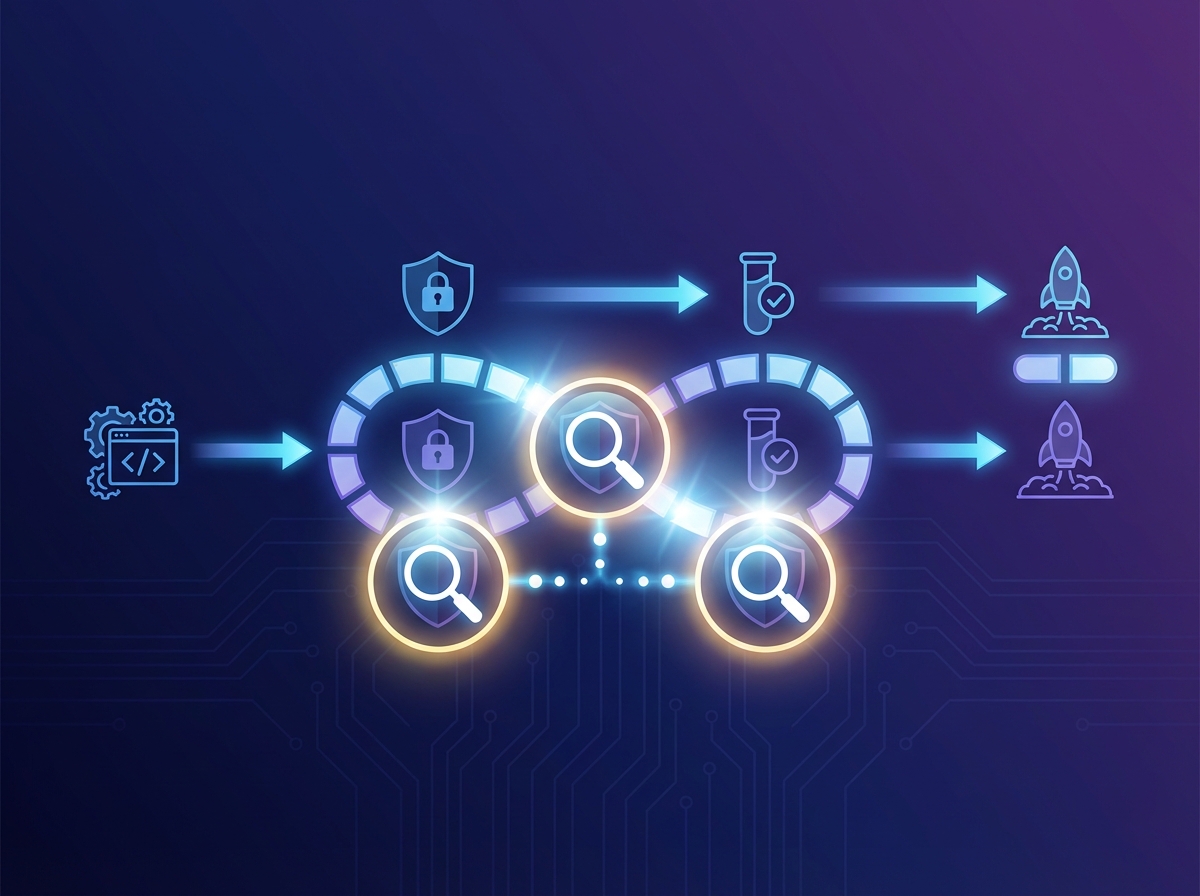
Traditional waterfall models often treat compliance as a final hurdle—a specific "gate" right before deployment. In highly regulated sectors like healthcare and finance, this delay is disastrous. By the time an auditor flags a violation, the code is already deeply integrated, making remediation expensive and time-consuming. To balance security with speed, teams must adopt a "Shift Left" mentality, moving compliance checks to the very beginning of the Software Development Life Cycle (SDLC).
The cornerstone of this strategy is Policy as Code. Rather than relying on static documents and manual checklists, organizations define regulatory requirements—such as HIPAA privacy rules or PCI-DSS encryption standards—as executable code. This allows compliance policies to be versioned, tested, and managed just like application logic.
Integrating these policies into the CI/CD pipeline transforms the developer experience. Instead of waiting weeks for a security review, automated auditing tools scan every commit and pull request. This provides developers with an immediate feedback mechanism, similar to how an IDE flags syntax errors:
- Immediate Prevention: If a developer attempts to commit code that exposes a database to the public internet, the build fails instantly.
- Educational Feedback: The system explains why the policy was violated, helping engineers understand the regulatory context without needing to become legal experts.
- Reduced Rework: Catching violations during the coding phase eliminates the need for massive, pre-launch refactoring cycles.
By treating compliance violations as build-breaking bugs, organizations ensure that security is not an afterthought but a fundamental quality of the software, enabling faster, safer releases.
Designing for Trust: UX Patterns for Regulated Apps
In the world of regulated applications, the frontend is where compliance meets human behavior. Security measures must be visible enough to reassure users, yet subtle enough not to impede their goals. The most effective interfaces treat security features as trust signals rather than bureaucratic hurdles, proving that safety and usability are not mutually exclusive.
Biometric integration offers the most immediate win for user experience. Instead of forcing users to input complex, 12-character passwords for every session, leverage native hardware capabilities like FaceID or TouchID. This integration utilizes the device’s secure enclave to authenticate users instantly, effectively replacing the frustration of rigid password policies with a seamless interaction that feels modern and secure.
Beyond login, the timing of data requests is critical. Developers should adopt “just-in-time” permissions rather than requesting blanket access during onboarding. If your app needs camera access to scan an insurance card or verify an ID, ask for it at the exact moment the user initiates that task. Context-aware requests prevent the feeling of data grabbing and significantly lower permission denial rates.
To further solidify this relationship, utilize explanatory micro-copy. A standard system permission dialog can feel intrusive, but pairing it with a succinct explanation—such as “We need camera access to verify your identity document before processing this transfer”—transforms the request into a protective measure. Transparency eliminates the guesswork and suspicion often associated with sensitive data collection.
Finally, reconsider the role of friction. While typically viewed as a negative in UX design, positive friction is a powerful tool in high-stakes environments. A deliberate pause or a specific animation during a large wire transfer gives the user a psychological anchor, confirming that the system is processing the gravity of the action. This calculated slowness reassures the user that the application is working hard to protect their assets, turning a potential delay into a confidence-building feature.

Architectural Resilience: Data Sovereignty and Audit Trails
Building a compliance-first application requires looking past the user interface and establishing a backend infrastructure designed for resilience. In sectors like healthcare and finance, architectural decisions are synonymous with legal adherence. This begins with data sovereignty—the absolute certainty of knowing physically where your data resides. Whether adhering to GDPR requirements in Europe or financial data localization laws in Asia, developers must configure cloud regions and storage buckets to ensure sensitive information never crosses prohibited borders.
Equally critical is the implementation of immutable audit trails. It is not enough to simply log system activity; these logs must be tamper-proof. By utilizing Write-Once-Read-Many (WORM) storage compliant with standards like SEC Rule 17a-4, organizations ensure that a history of "who, what, and when" remains permanent. This creates a forensic reality that bad actors cannot scrub, providing distinct evidence during investigations and peace of mind during regulatory reviews.
To further harden the system, modern architectures are moving away from monolithic structures in favor of microservices that enforce strict data scope isolation. By decoupling sensitive data services from general application logic, teams can achieve several strategic wins:
- Reduced Blast Radius: If a non-sensitive service (like a notification engine) is compromised, the attacker does not automatically gain access to PII or PHI stored in a secured, separate vault.
- Granular Access Control: Services can be authenticated individually, ensuring that only specific, authorized microservices can request financial ledgers or patient records.
- Simplified Compliance Audits: Instead of auditing a massive codebase, regulators can focus strictly on the isolated services that handle sensitive data, significantly reducing the time and cost of certification.